Why interaction matters at home
Museums spend enormous effort persuading people to slow down and look. At home you have a quieter advantage: the same people pass the same shelf hundreds of times. A display that occasionally changes, or that holds a small surprise, rewards those repeat visits. It also gives guests something to ask about, and gives children a way into family history that a closed album never could.
Some of the most loved collections work this way. At Kettle's Yard, visitors may sit in the chairs and see objects at the angle the owner intended. The Pitt Rivers Museum in Oxford lets you pull open drawers to find more. The Barnes Foundation in Philadelphia arranges paintings with hinges, keys and ironwork, nudging visitors to compare shapes. You can borrow each idea in miniature.
Labels in your own voice
Handwritten tags
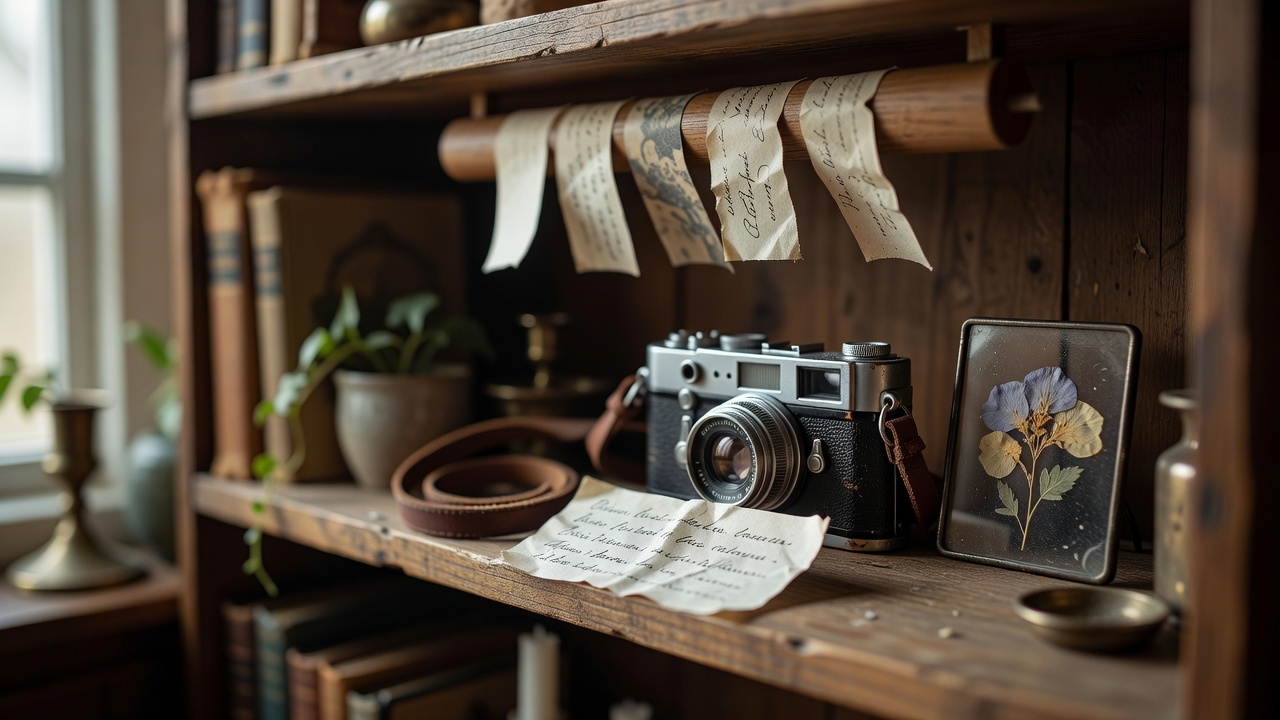
A luggage tag or folded card: what it is, where it came from, one sentence of memory. Your handwriting is part of the display.
Question labels
"Can you find the bird?" or "Which year was this taken?" turns looking into a gentle game for visitors of any age.
A display notebook
Keep a small book nearby with longer stories, provenance notes and space for guests to add their own memories.
Rotate rather than accumulate
Rotation solves three problems at once: limited space, light exposure and visual fatigue. Keep a labelled storage box – acid-free for paper and textiles – and plan a simple calendar. The Japanese tokonoma alcove offers a centuries-old model: one scroll and one seasonal arrangement, changed to mark the time of year. A single shelf or ledge treated this way becomes a household ritual.
| Rhythm | What changes | Effort |
|---|---|---|
| Monthly | One "object of the month" on a dedicated shelf with a label. | 5 minutes |
| Seasonally | Swap three pieces on a picture ledge; adjust colours to the season. | 20 minutes |
| Yearly | Rethink one full wall; retire some pieces to storage or give them away. | An afternoon |
Displays you can touch or open
A handling shelf
Choose sturdy pieces – shells, stones, wooden toys, worn tools – and place them low, with an explicit invitation to pick them up.
Drawers and boxes
Shallow drawers lined with fabric hide small collections until someone opens them. Discovery is the reward.
Swappable frames
Front-loading or magnetic frames let you change a photograph in seconds, encouraging frequent updates.
Child-height viewing
Hang one small group at 90–110 cm, or dedicate a low shelf to a child's own curated finds.
Digital, used lightly
A digital photo frame can cycle through hundreds of images, and a printed QR code on a label can link to a voice recording of the person who made an object. Use these sparingly; the charm of a home display usually lies in physical things and the hands that arranged them. If you do add screens, set them to dim at night and keep them away from light-sensitive originals.